BLUE OCEAN LOYALTY × Admitad Rewards Podcast Transcript (Edited for Publication)
Participants:
- Archie — Regional Director, Admitad Rewards
- Lansy Joseph — Founder & CEO, BLUE OCEAN LOYALTY
Introduction
Archie (Admitad Rewards): Today we’re discussing how loyalty is evolving — particularly in the GCC — and why the industry may be approaching a turning point.
With AI, agentic commerce, changing consumer expectations, and the growing importance of measurable marketing ROI, both banks and brands are rethinking how customer engagement should work in the future.
Joining me is Lansy Joseph, Founder & CEO of BLUE OCEAN LOYALTY.
Lansy Joseph (BLUE OCEAN LOYALTY): Thank you for having me.
The loyalty market today is still largely bank-led or issuer-led rather than brand-led.
You have issuer loyalty programmes such as ADCB TouchPoints, Emirates NBD Plus Points, or FAB Rewards. At the same time, there are strong brand loyalty programmes like Emirates Skywards or Shukran.
But the most economically resilient programmes today are typically the bank-led programmes — largely because rewards are replenished continuously through interchange economics.
Every time consumers spend using their payment cards, new rewards are generated.
That creates a recurring engagement loop which most standalone merchant or coalition loyalty programmes struggle to replicate consistently.
However, we believe this dynamic is beginning to shift.
The future of loyalty is increasingly Brand-led than Bank-led.
Why Brands Want a Bigger Role in Loyalty
Archie: Banks already control payment data and transaction visibility.
Why do you think brands now want to move closer to the payment layer themselves?
Lansy Joseph: Data is certainly part of the equation, but the larger issue is engagement frequency and relevance.
Many brands simply do not interact with consumers often enough within their own closed ecosystems.
For example:
- an airline customer may only fly a few times per year
- a retail customer may engage more frequently, but also has many competing alternatives
- a fuel retailer may have weekly engagement, but within a relatively narrow use case
As a result, loyalty programmes increasingly need to extend beyond their own closed environments if they want to remain relevant in consumers’ daily lives.
That’s why we see growing importance in what I would describe as “restricted open-loop loyalty” models.
Closed-Loop vs Open-Loop Loyalty
Lansy Joseph: Traditional loyalty programmes are typically closed-loop.
For example, with a retailer loyalty programme, consumers earn and redeem rewards only within that retailer’s own ecosystem.
But programmes like Emirates Skywards operate differently.
You can earn miles not only when flying Emirates, but also through selected partner merchants and experiences. That creates a broader engagement model that extends beyond the airline itself.
This becomes valuable for all parties:
- consumers receive more frequent recognition and rewards
- loyalty programmes remain more relevant in daily life
- merchants gain access to highly valuable customer segments
The challenge, however, is attribution.
The Attribution Problem in Existing Loyalty Models
Archie: Attribution seems to be one of the core industry challenges today.
Consumers often have multiple loyalty programmes, multiple linked cards, and multiple overlapping offers at the same merchant.
How do brands determine what actually influenced the transaction?
Lansy Joseph: That is precisely the limitation of most current card-linked models.
In many cases, the transaction would likely have occurred organically anyway — regardless of whether a linked offer existed.
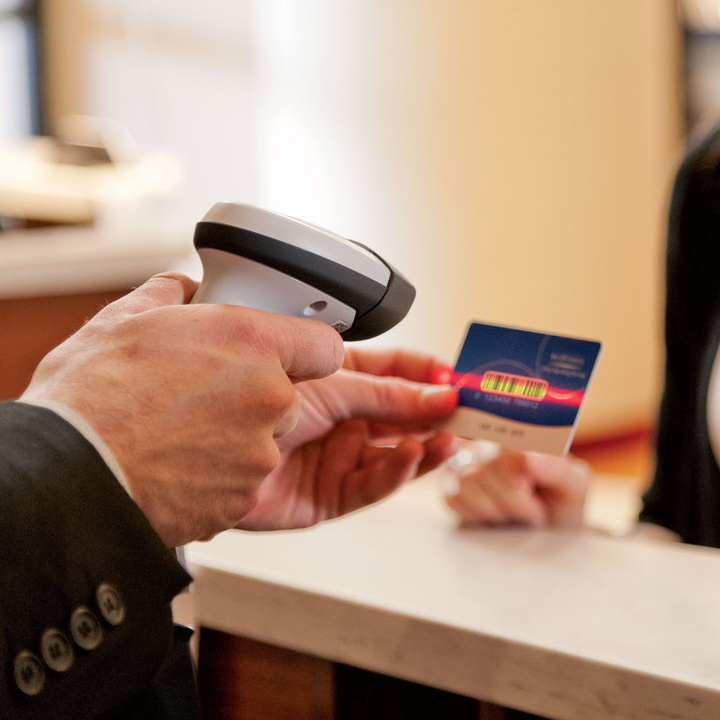
Traditional card-linked systems rely on what is effectively post-transaction detection: a transaction is “spotted” after it has already happened.
That creates ambiguity around incrementality and attribution.
Some programmes attempt to solve this through “click-to-activate” flows, where consumers manually activate offers beforehand.
But this introduces behavioural friction.
Consumers do not naturally think:
“Before I buy coffee, let me open an app and activate an offer.”
The further loyalty mechanics move away from natural payment behaviour, the lower the real-world engagement tends to become.
The Problem with Issuer-Led Loyalty Economics
Lansy Joseph: If you look at many retail environments today, there is an interesting dynamic happening at checkout.
A customer reaches the point of sale, and the cashier asks:
“Do you have an HSBC card?”
If the customer does, they receive a discount or cashback.
The issue is that the bank may not have influenced that purchase in any meaningful way.
The consumer was already intending to buy.
Yet the merchant is still giving away a portion of their margin simply because the customer happens to hold a particular issuer card.
From the merchant’s perspective, this can become highly cannibalistic.
However, merchants continue doing this because:
Bank cardholders are the only practically identifiable audience at checkout.
That is the structural advantage banks have historically had.
Introducing Flexible-Credential Reward Cards
Archie: So how does BLUE OCEAN LOYALTY solve this?
Lansy Joseph: The key idea is very simple: Convert every member of a loyalty ecosystem into an identifiable payment cardholder.
Once you do that, brands gain the same ability banks have traditionally had — the ability to recognise customers seamlessly at the moment of payment.
That is where our infrastructure comes in.
We call it a Loyalty-Native Flexible Credential.
It is designed specifically for loyalty and performance marketing use cases.
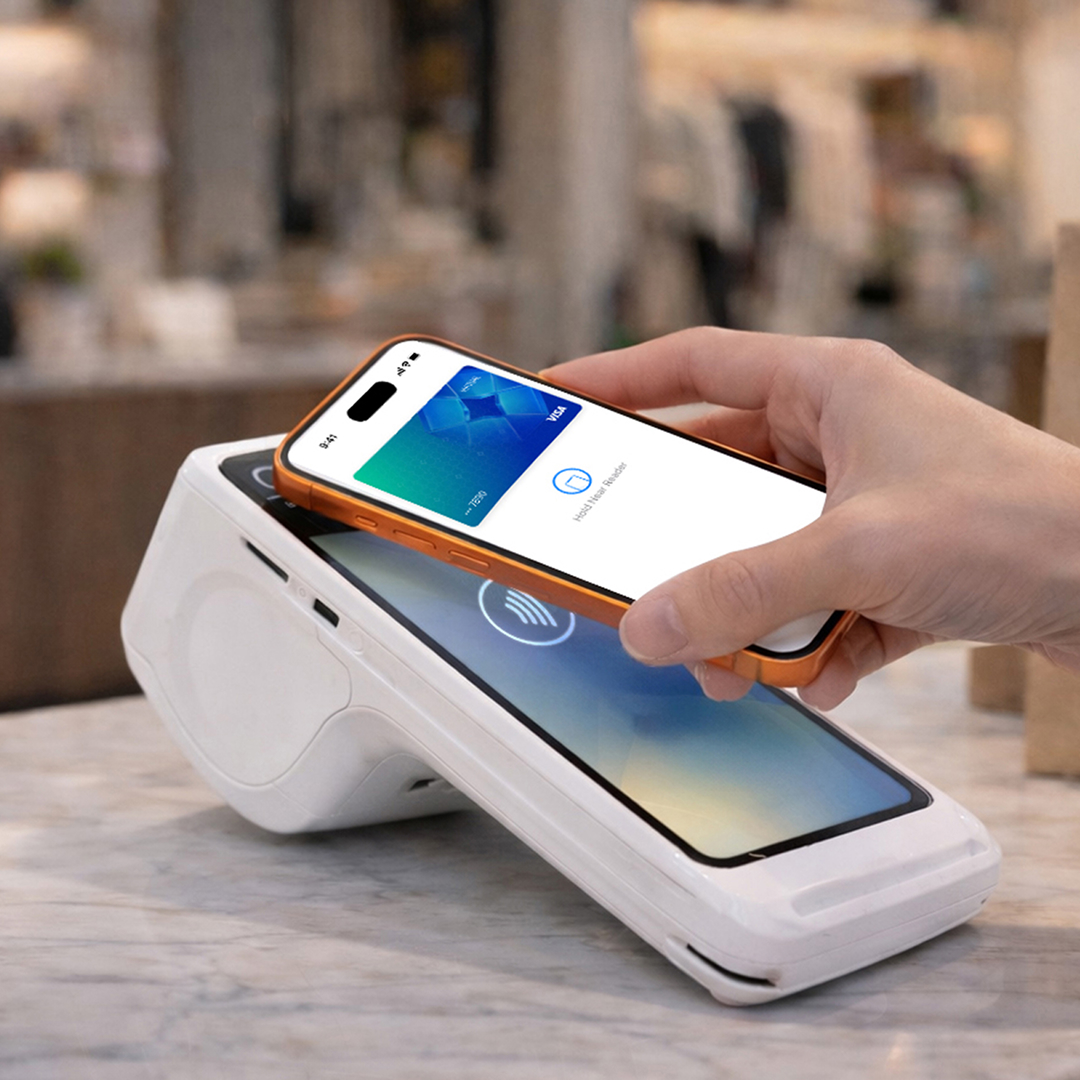
For the consumer, it behaves like a digital payment card.
But unlike traditional credit, debit, or prepaid cards:
- it does not require a credit line
- it does not require a funded balance
- it does not require opening a new bank account
This enables programmes to issue credentials at scale across their entire member base.
Whether a programme has 500,000 members or 5 million members becomes irrelevant.
Every member becomes an identifiable cardholder.
That solves the foundational challenge of recognition and attribution.
Why Personalisation Matters
Archie: Once every member becomes identifiable, how should brands think about rewards and engagement?
Lansy Joseph: Personalisation becomes essential.
Not every consumer should receive the same offer.
From a consumer perspective, members have different value profiles.
From a merchant perspective, reward economics also need to align with expected transaction value and customer behaviour.
For example:
- a merchant may be comfortable funding a certain reward level for lower-value transactions
- but may offer stronger incentives for higher-spending customers
- acquisition incentives may differ from repeat engagement incentives
The important point is that loyalty should not become a one-size-fits-all system.
It should dynamically reflect both customer value and merchant objectives.
Loyalty Is a Form of Performance Marketing
Archie: One of the interesting themes in this conversation is the overlap between loyalty and performance marketing. How do you view that relationship?
Lansy Joseph: In my opinion, loyalty is fundamentally a form of performance marketing.
If we take Emirates Skywards as an example:
- the customer identifies themselves as a Skywards member
- the customer engages commercially with Emirates
- the customer receives rewards based on that engagement
From a structural standpoint:
- Skywards functions as the publisher
- Emirates functions as the advertiser
The difference is simply that both exist within the same organisation.
Traditional affiliate or performance marketing introduces a third-party network because the publisher and advertiser are separate entities.
But conceptually, both models are built around the same principle: Rewarding measurable consumer behaviour.
Loyalty is performance marketing when publisher and advertiser are the same entity.
Why Loyalty and Performance Marketing Are Converging
Lansy Joseph: Historically, brands have operated loyalty systems and performance marketing systems separately.
Different technologies. Different infrastructure. Different attribution models.
That creates inefficiency.
It also makes large-scale interoperability difficult.
Our belief is that loyalty infrastructure should support both:
- first-party loyalty engagement
- third-party ecosystem monetisation
using the same underlying transaction infrastructure.
That is where interoperability becomes extremely powerful.
Solving Attribution Properly
Archie: Attribution continues to come back as the central issue. How does your model solve attribution differently from existing card-linked approaches?
Lansy Joseph: The difference is fundamental.
Traditional card-linking works through post-transaction spotting.
Our model works directly within the payment flow itself.
If a customer chooses to pay using a loyalty-embedded credential associated with a particular programme, that action itself becomes proof of attribution.
For example:
- paying with a Skywards-embedded credential demonstrates intent to engage as a Skywards member
- paying with a Shukran-embedded credential demonstrates intent to engage as a Shukran member
- paying with a standard issuer card indicates organic spend
This creates deterministic attribution. The intent is embedded directly into the payment behaviour.
Real-Time Personalisation and Engagement
Lansy Joseph: Because the transaction is processed within the payment flow itself, engagement can also happen in real time.
For example:
- a loyalty app could notify a customer about nearby partner offers
- offers could change dynamically based on time or context
- rewards could adapt based on recent purchase behaviour
Importantly, this intelligence must remain contextually relevant.
If a customer just purchased coffee five minutes ago, there is little value in immediately sending another coffee promotion.
The quality of personalisation depends entirely on the quality and immediacy of transaction intelligence.
Loyalty in the Era of AI and Agentic Commerce
Archie: How do you see loyalty evolving in a world increasingly shaped by AI and agentic commerce?
Lansy Joseph: Agentic commerce changes the nature of decision-making itself.
Consumers may increasingly instruct AI agents to complete transactions on their behalf.
In that environment, loyalty intent risks disappearing unless it is embedded directly into the payment layer.
For example:
If an AI agent orders food on behalf of a customer using a generic payment method, the loyalty intent is lost.
But if the payment credential itself carries loyalty context, then the transaction still preserves the customer’s intended brand affiliation and reward preference.
That is why we believe embedding loyalty into payment infrastructure becomes increasingly important in the AI era.
Embedding customer intent into the payment itself is what preserves attribution in an Agentic Commerce environment.
The GCC Opportunity
Archie: How do you view the GCC market in terms of loyalty maturity and opportunity?
Lansy Joseph: The UAE is, in my opinion, the most mature loyalty market in the GCC.
You can see this through:
- the number of loyalty programmes in market
- the sophistication of customer engagement strategies
- the availability of experienced loyalty talent
Saudi Arabia, meanwhile, represents an enormous growth opportunity.
The scale of the market and the ambitions associated with Vision 2030 create strong demand for next-generation loyalty infrastructure.
That is why both the UAE and Saudi Arabia are strategic focus markets for us.
Advice for Brands
Archie: What advice would you give to brands operating in this space today?
Lansy Joseph: Brands should move away from measuring success purely through membership volume.
The more important question is:
“How valuable is the programme for its members?”
Engagement quality matters far more than raw scale. If members actively engage, receive meaningful value, and change behaviour because of the programme, that is what defines a successful loyalty ecosystem.
Advice for Banks
Archie: And what about banks?
Lansy Joseph: Banks should prepare for a future where co-branded ecosystems become increasingly important.
Issuer-branded cards will continue to exist.
But over time, we believe consumers will increasingly engage through brand-led payment experiences.
Banks that enable those ecosystems — rather than resisting them — will be best positioned for the next phase of loyalty evolution.
Advice for Consumers
Archie: And finally, what advice would you give consumers?
Lansy Joseph: Consumers should recognise the value of their brand affiliations.
If you are highly engaged with certain brands, that relationship has value.
You should expect to be recognised and rewarded consistently across the broader ecosystem — not only within a single closed-loop environment.
The future of loyalty is ultimately about making those relationships more meaningful, more measurable, and more seamlessly integrated into everyday payment behaviour.
Why BLUE OCEAN LOYALTY and Admitad Rewards Partnered
Archie: Why did BLUE OCEAN LOYALTY and Admitad Rewards decide to partner together?
Lansy Joseph: Because the opportunity requires both:
- robust attribution infrastructure
- and scalable ecosystem orchestration
Admitad Rewards brings deep expertise in performance marketing and ecosystem connectivity.
BLUE OCEAN LOYALTY brings the payment-native attribution infrastructure.
Together, the partnership creates a model where:
- publishers can monetise audiences more effectively
- advertisers gain measurable incremental sales
- attribution becomes deterministic rather than probabilistic
- loyalty and performance marketing operate through a unified framework
That combination is extremely powerful.
Conclusion
Archie: Thank you very much for the discussion. There is clearly much more to explore in this space — particularly around attribution, AI, loyalty economics, and the future of brand-led ecosystems.
Lansy Joseph: Absolutely.
This is still a relatively new category.
A great deal of education and market awareness still needs to happen.
But the direction is becoming increasingly clear: Loyalty is moving closer to the payment itself.
And over time, we believe that will fundamentally reshape how brands, merchants, issuers, and consumers interact within the loyalty ecosystem.